 Skip to content
Knowing how to write goals properly can make the difference between having a vague intention and creating a clear plan you can act on.
A strong goal should be specific, measurable and connected to the person you want to become. It should give you enough direction to know what progress looks like and what action to take next.
Many people write goals such as get fitter, earn more money or be more confident. These are positive intentions, but they are not clear enough to guide daily behaviour.
A better goal would be:
I will complete three strength training sessions every week for the next twelve weeks to improve my energy, fitness and confidence.
This goal works because it is clear. You know what needs to happen, how often it needs to happen, and why it matters.
This guide explains how to write goals that are easier to understand, easier to measure and easier to act on. You can also download our free Example Goals & Templates PDF to see what properly written goals look like across every area of the Life Harmony Model.
Download Free Goal Examples and Templates
Not sure what a well-written goal should look like?
Our free Example Goals & Templates PDF gives you a practical starting point.
Inside, you’ll find:
- seven completed goal examples across the Life Harmony Model
- a simple SMART goal structure
- a printable goal-writing template
- examples you can use for inspiration
- a clear format you can follow when writing your own goals
Already own The Journal for Goal Achievement?
You already have access to this download and other companion resources inside the Journal Resources section using the access code included with your journal.
What Makes a Goal Effective?
A goal is not just something you want.
A goal is a clear outcome with a structure behind it.
For a goal to be useful, it should answer four questions:
- What do I want to achieve?
- Why does it matter?
- How will I measure progress?
- What actions will move me towards it?
Without those answers, a goal can quickly become too vague to act on.
For example:
I want to save more money.
This is a common goal, but it does not explain how much money you want to save, when you want to save it by, or what you will do differently.
A clearer version would be:
I will save £2,400 over the next six months by transferring £400 into savings each month.
This gives the goal structure. You can measure it. You can track it. You can break it down into monthly action.
That is the purpose of writing goals properly. Not to make them sound impressive, but to make them usable.
Putting a goal on paper is useful for more than simply recording it. There are several benefits of writing goals down, including greater clarity, easier progress tracking and a clearer sense of what to do next.
Start With Identity Before Outcomes
At Goal Achievement Hub, we believe meaningful goals should begin with identity.
Before asking, What do I want to achieve? ask:
Who do I want to become?
This matters because the strongest goals are not isolated targets. They support the identity you are choosing to build.
For example, someone might write:
I want to run a half marathon.
That is a clear outcome, but it becomes more powerful when connected to identity:
I am becoming someone who prioritises health, trains consistently and follows through on physical challenges.
The goal then becomes part of a larger direction.
The same principle applies to financial, occupational, relationship or lifestyle goals. A goal should not only help you achieve something. It should help you become someone who lives, thinks and acts in a more intentional way.
This is why identity is a central part of The Journal for Goal Achievement. Goals sit between who you want to become and the actions you take each day.
Use SMART Goals as a Clarity Check
The SMART method is a simple framework for checking whether your goal is clear enough to act on.
What does SMART stand for?
SMART is a simple framework that helps make your goals clearer, more measurable and easier to act on.
- SSpecific: the goal clearly states what you want to achieve.
- MMeasurable: progress can be tracked.
- AAchievable: the goal is realistic within your current circumstances.
- RRelevant: the goal supports your values, priorities and identity.
- TTime-bound: the goal has a clear deadline or timeframe.
SMART goals are useful because they reduce uncertainty.
They help you move from:
I want to read more.
To:
I will read 24 books over the next 12 months by reading for 20 minutes each morning.
The second version is easier to act on because it includes a target, a timeframe and a repeatable action.
SMART does not need to make goal setting complicated. It simply helps you check whether your goal is specific enough to support real progress.
For a practical structure you can follow, use our free goal setting template inside the Example Goals & Templates download.
Turn Your Goal Into an Action Plan
A goal gives you direction. An action plan explains how you will move.
Every effective goal needs practical steps behind it. These steps can include repeatable habits, one-off tasks or decisions you need to make in advance.
For example, if your goal is:
I will save £2,400 over the next six months by transferring £400 into savings each month.
Your action plan might include:
- set up an automatic monthly transfer
- cancel unused subscriptions
- plan meals before the weekly food shop
- review spending every Sunday
- reduce unnecessary impulse purchases
None of these actions are dramatic, but they create structure.
That structure matters because motivation is not constant. Some days you will feel focused. Other days you will not. A good action plan reduces the need to rely on motivation because it tells you what to do next.
The full goal achievement system inside The Journal for Goal Achievement is designed to connect longer-term goals with daily action, reflection and review.
A Complete Goal Example
Here is a complete example using the structure from the free download.
Identity
I am someone who takes care of my body and follows through on commitments to my health.
Goal
Lose 8kg of body fat in six months.
Why it matters
So that I feel confident, healthy and energetic, and prove to myself that I can follow through on commitments to my body.
Action plan
- Eat whole foods and prioritise protein at every meal
- Train four times per week
- Walk at least 8,000 steps daily
- Reduce alcohol to once per week
- Track calories and body weight weekly
SMART check
- Specific: lose 8kg of body fat
- Measurable: weekly weigh-ins
- Achievable: six months allows steady progress
- Relevant: supports health, confidence and self-discipline
- Time-bound: six months
This is what a well-written goal does. It turns a broad idea into something clear, measurable and practical.
You do not need to copy this goal. The purpose is to understand the structure so you can apply the same thinking to your own life.
The free SMART goal examples download includes seven completed examples across different areas of life, so you can see how the same structure works in different situations.
Use the Life Harmony Model To Choose Better Goals
Goals are more effective when they reflect the life you are actually trying to build.
The Life Harmony Model used in The Journal for Goal Achievement organises personal development into seven key areas:
The seven areas of the Life Harmony Model
The Life Harmony Model helps you organise your goals across seven key areas of personal development.
Health, training, energy and wellbeing.
Focus, confidence, motivation and mental resilience.
Meaning, mindfulness, faith, calm and inner alignment.
Family, friendships, romantic relationships and connection.
Money, security, income and wealth building.
Work, study, productivity, mission and purpose.
Travel, experiences, freedom and life design.
You do not need to set goals in every area at once.
The model simply helps you understand where your attention is going and whether your goals support the wider life you want to create.
Sometimes one focused goal in the right area can improve several other areas at the same time. A physical goal may improve confidence. A financial goal may reduce stress. A relationship goal may improve emotional wellbeing.
The aim is not perfect balance. The aim is intentional progress.
You can explore the wider Life Harmony resources inside the Journal Resources hub.
Download the Free Goal Examples PDF
Writing goals becomes easier when you can see what a good goal looks like.
The free Example Goals & Templates PDF includes one complete example goal for each area of the Life Harmony Model, plus a printable template you can use to practise writing your own SMART goals.
Use it to:
- understand how clear goals are structured
- avoid vague or unrealistic goal setting
- create stronger action plans
- link goals back to identity
- start building a more practical goal-setting system
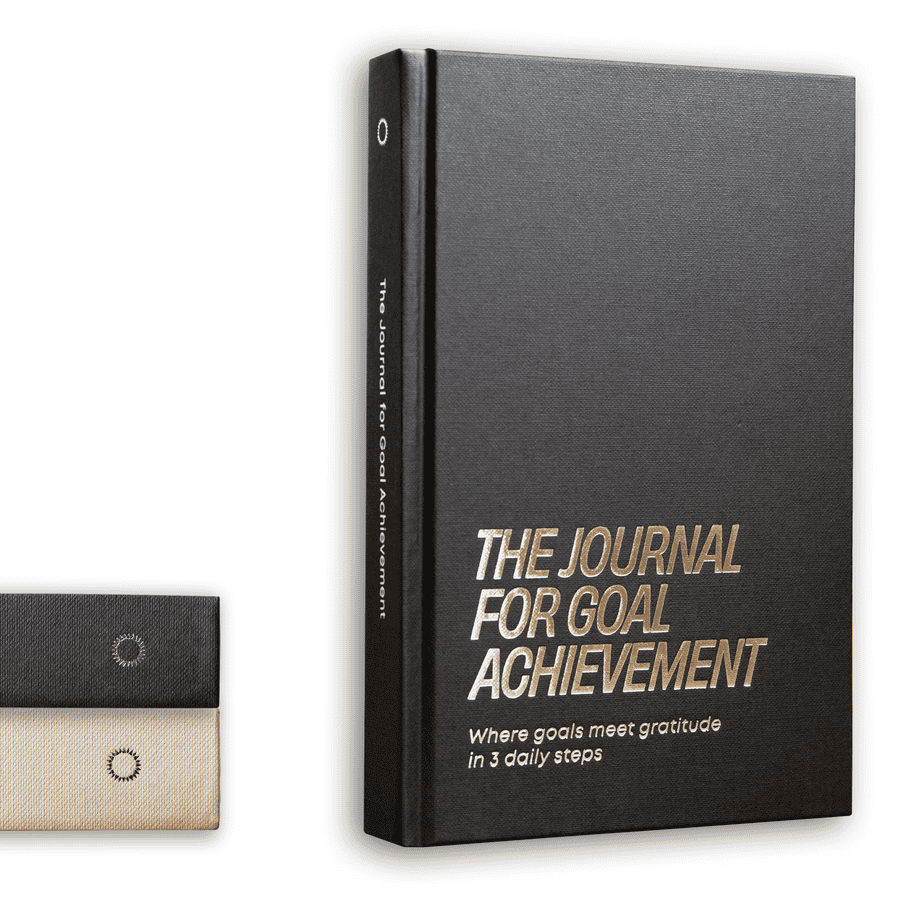
Where The Journal for Goal Achievement Fits In
The free download helps you write better goals.
The Journal for Goal Achievement helps you live them.
Inside the journal, your goals are connected to identity, daily action and reflection. This helps you move beyond simply writing goals down and start building a routine around them.
The journal is designed to help you:
- define the identity you are choosing to build
- set meaningful goals across the Life Harmony Model
- focus on three important actions each day
- reinforce positive beliefs and standards
- reflect on progress, wins and improvements
- review your goals consistently
Writing a goal is the starting point. Creating a daily system around that goal is what helps turn intention into progress.

Start With One Clear Goal
You do not need to change every area of your life at once.
Start with one clear goal.
Make it specific. Make it measurable. Connect it to the person you want to become. Then decide what action will move you forward.
Progress begins when a goal becomes clear enough to guide your next decision.
Download the free Example Goals & Templates PDF and start writing goals with more clarity, structure and purpose.
Discover more from Goal Achievement Hub
Subscribe to get the latest posts sent to your email.

